Defence
F-35 Deliveries Resume as Lockheed Faces Pentagon Budget Cuts
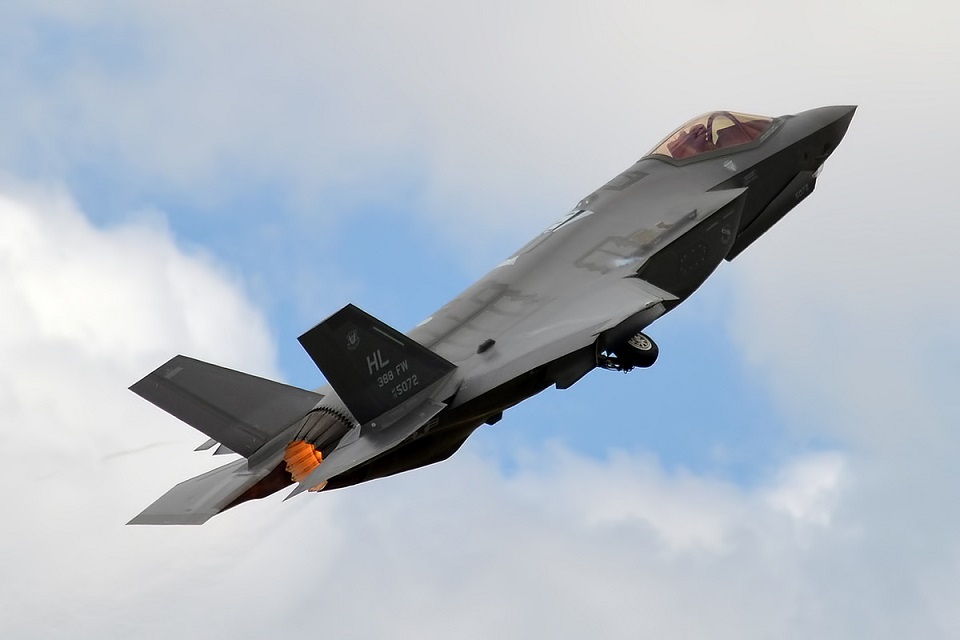
According to Bloomberg News, defense giant Lockheed Martin (LMT.N) has delivered 72 F-35 fighter jets to the U.S. government as of May 1, 2025, despite facing months of delivery delays tied to late-stage software improvements.
These delays stemmed from complications involving the implementation of Technology Refresh 3 (TR-3)—a critical software and hardware upgrade package that enhances processing power, sensor integration, and electronic warfare capabilities for the F-35.
As recently, United Kingdom and Germany—are doubling down on their commitment to fifth-generation airpower. Both nations have made bold moves to secure their skies and strengthen transatlantic defense cooperation. Their weapon of choice? The F-35 Lightning II—a cutting-edge stealth fighter jet that continues to dominate headlines and procurement lists across the globe.
Even in India, the F-35 made recent headlines after one of the U.S. Air Force’s F-35s was forced to make an emergency landing in Kerala, underscoring the aircraft’s growing presence and operational footprint in the Indo-Pacific.
Despite this, The report, citing the Pentagon’s F-35 Joint Program Office, highlights that Lockheed Martin is working through a backlog of aircraft previously grounded or awaiting upgrades due to the TR-3 hold-up. These improvements are essential for keeping the F-35 combat-ready against near-peer adversaries in increasingly complex threat environments.
Program Under Pressure Amid Budget Cuts
While the F-35 program remains a cornerstone of Lockheed Martin’s defense portfolio—making up nearly 30% of its annual revenue—the future pace of production may be slowing.
The Trump administration’s fiscal year 2026 defense budget proposal, released in June 2025, outlines a reduction in F-35 procurement from 68 to 47 aircraft. The budget shift reallocates funding toward unmanned systems, hypersonic weapons, and next-generation munitions, reflecting a broader strategy focused on distributed lethality and battlefield adaptability.
According to the report, new production funds will continue to be withheld, with remaining allocations expected to be released incrementally into 2026. This move places financial pressure on Lockheed and adds uncertainty for partner nations awaiting delivery schedules.
Training the Next Generation of F-35 Pilots
As deliveries continue, training remains a central pillar of the F-35’s global success. A key feature of this effort is the Full Mission Simulator (FMS)—a high-fidelity, immersive training system used for mission rehearsal, tactics development, and pilot certification. These simulators are part of the Distributed Mission Training (DMT) network, which enables joint training across global locations in shared virtual airspace.
This virtual training model significantly reduces wear and tear on actual jets and cuts operational costs—while sharpening pilot readiness for real-world missions. Even after certification, pilots regularly return to simulators to maintain and refine their skills.