Defence
France Blasts Belgium Over F-35 Buy Amid FCAS Talks
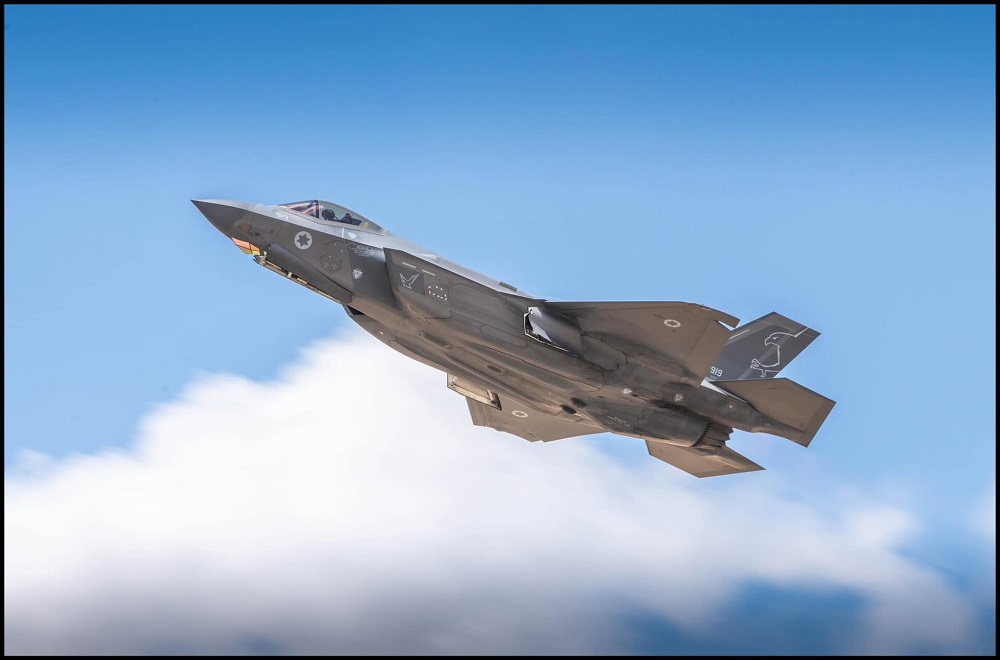
In the high-stakes world of global defense, fighter jet deals are never just about aircraft—they’re about power, politics, alliances, and billions in future profits. And in Europe, one such deal is causing serious turbulence.
Belgium’s recent decision to purchase additional American-made F-35 fighter jets has not only surprised its NATO allies—it has also sparked outright frustration in France. At the center of the storm is Dassault Aviation, the French aerospace giant leading Europe’s next-gen fighter project, FCAS. So why has Belgium’s move touched a nerve in Paris?
Let’s break it down.
According to Reuters, Belgium is now reconsidering its position in the Future Combat Air System (FCAS)—Europe’s ambitious sixth-generation fighter jet program—after sharp public criticism from Dassault Aviation CEO Éric Trappier.
The French aerospace chief questioned Belgium’s dual-track approach: asking for full partnership in FCAS while simultaneously expanding its fleet of U.S.-made F-35A Lightning II jets.
This tension exposes the deeper rift between national interests and European unity in defense manufacturing.
Trappier’s Outburst: A Message to Brussels
Éric Trappier didn’t mince words. In a pointed statement covered by Euractiv, he said:
“If [Belgium] gives up the idea of buying F-35s, they’d be welcome; if they are not, then that’s making a monkey out of us.”
That blunt remark reflects France’s frustration with Belgium trying to gain industrial benefits from the FCAS program, while its procurement dollars flow to Lockheed Martin, the American manufacturer of the F-35.
The Stakes: A $100 Billion European Dream
The FCAS program, led by Dassault Aviation and Airbus, is one of the most expensive and ambitious military aviation projects in European history, with an estimated cost of $100 billion. Designed to field a sixth-generation fighter jet by 2040, FCAS will eventually replace the Rafale (France), Eurofighter Typhoon (Germany), and EF-18 Hornet (Spain).
Despite earlier disputes over profit-sharing and leadership within the FCAS program, the partners have since reached a standard industrial agreement. But Belgium’s push for full partner status has reawakened internal concerns—especially from France, which sees this as a credibility issue.
Belgium’s Defense Moves: Caught Between Two Worlds
Belgium has committed €300 million to FCAS and expressed ambitions to co-develop and co-produce within the program. At the same time, it’s moving forward with plans to buy 11 more F-35As, on top of its existing order.
For Dassault and French defense circles, this looks like having it both ways—benefitting from European R&D and defense jobs while outsourcing real procurement to the U.S.
Adding fuel to the fire, the additional F-35s are being assembled in Italy, not at Lockheed’s U.S. plant, which still doesn’t erase their American origin.
Meanwhile: Belgium Sends F-16s to Ukraine
As it transitions to the F-35, Belgium is also pledging its retiring F-16 Fighting Falcons to Ukraine—a move that has drawn praise across NATO, especially as the alliance pushes members to increase defense spending. Recently, NATO encouraged members to target 3.5% of GDP for defense budgets.
This proactive stance has been applauded by many—but for France, it doesn’t outweigh the strategic contradiction of relying on U.S. jets while trying to gain influence in a European-led program.
Behind the Scenes: Industrial Tensions and Jobs
Trappier’s public frustration may also be about jobs, influence, and production rights. He accuses Belgium of trying to secure industrial benefits and workshare in FCAS—possibly even production offsets—without fully aligning with the project politically or economically.
It’s not just France that’s uneasy. There may also be friction from Berlin and Madrid, who are watching closely how workshare is being distributed within the consortium. Every nation wants its fair slice of the defense-industrial pie, and Belgium’s behavior is raising questions.
Final Thoughts: A Fighter Jet, or a Fault Line?
At its core, the F-35 deal with the U.S. and Belgium’s simultaneous involvement in FCAS reveals a bigger struggle for Europe—whether it can truly unite on strategic defense programs or continue relying on U.S. solutions.
France’s anger isn’t just about aircraft—it’s about defense autonomy, trust among partners, and long-term sovereignty.