Defence
Turkey Set to Acquire Eurofighter as Germany Lifts Export Ban
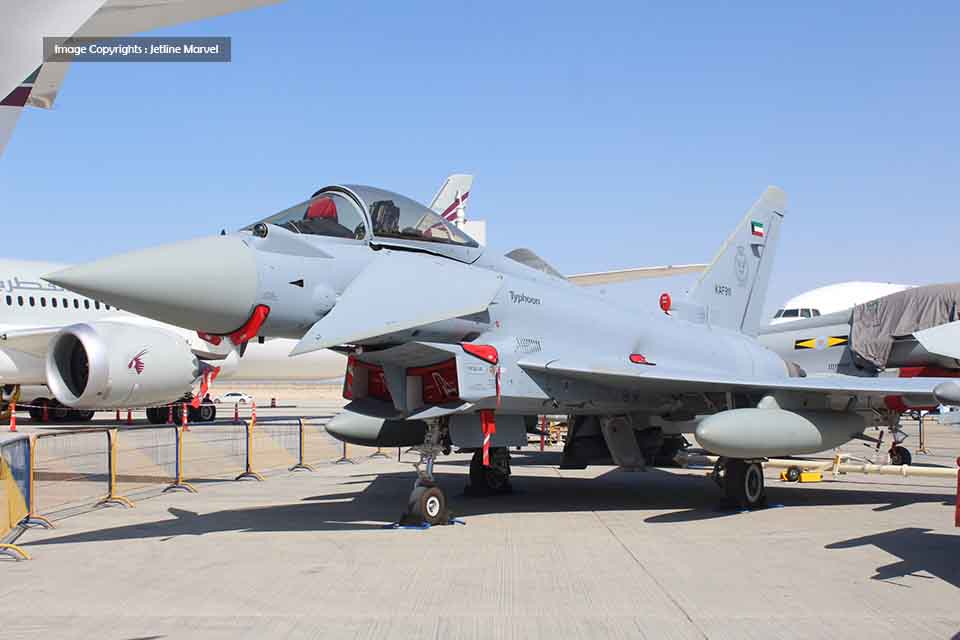
In a major shift that could reshape military aviation ties within NATO, Germany appears ready to lift its long-standing export ban on the Eurofighter Typhoon sale to Turkey.
This policy change, driven by the new German administration under Chancellor Friedrich Merz, has injected fresh momentum into a long-stalled deal—signaling a potential breakthrough in European defense cooperation and a strategic leap for Turkey’s air power ambitions.
Berlin Shifts Gears on Arms Exports
According to German daily Handelsblatt, sources within both the German government and defense industry have confirmed that Berlin is no longer opposing the Eurofighter sale to Turkey.
The previous coalition—led by the Social Democratic Party (SPD) and its partners, the Greens and Free Democrats (FDP)—had blocked the deal due to political concerns over Turkey’s foreign policy and human rights record.
However, the newly elected federal government under Chancellor Merz is expected to take a more permissive stance on arms exports, signaling a broader recalibration of Germany’s defense export policies.
Why the Eurofighter Matters to Turkey
The Eurofighter Typhoon is a 4.5-generation multirole combat aircraft jointly developed by Airbus (Germany and Spain), BAE Systems (UK), and Leonardo (Italy). It brings a combination of agility, speed, and cutting-edge avionics—making it a highly versatile platform for both air-to-air combat and ground-attack missions.
Key features include:
- Captor-E AESA radar, which offers advanced target detection and tracking
- Defensive Aids Subsystem, providing electronic countermeasures against enemy missiles
- Supercruise capability, allowing sustained supersonic flight without afterburners
- Compatibility with a wide array of air-to-air and precision-guided weapons
While not stealthy like the F-35, the Typhoon offers high-end performance and multinational interoperability—valuable traits for a NATO member like Turkey.
Strategic Implications for Turkey and NATO
For Turkey, the Eurofighter deal could fill critical gaps left by its removal from the F-35 program in 2019, following its purchase of the Russian-made S-400 air defense system. Ankara has since explored several fighter jet options, including U.S. F-16s, Russia’s Su-35, and China’s J-10C—but the Eurofighter offers a uniquely Western, combat-proven solution with NATO-aligned systems.
The timing is also critical. With growing tensions across Eastern Europe, the Eastern Mediterranean, and the Caucasus, Turkey is under pressure to upgrade its air force capabilities. If finalized, the Eurofighter deal would strengthen NATO’s southern flank, even as it raises questions about integration challenges and long-term political alignment between Ankara and its Western allies.
A Boost for Europe’s Aerospace Industry
From an industrial standpoint, the potential Turkish order would be a lifeline for the Eurofighter production lines, extending their operation and securing thousands of jobs across Europe. As Western defense firms compete with U.S. and Chinese platforms in both pricing and capabilities, deals like this one are vital to maintaining Europe’s strategic autonomy in military aviation.
The Eurofighter consortium has been seeking new customers to sustain production, and Turkey’s possible acquisition would signal renewed trust in European defense systems beyond traditional buyers.
Conclusion:
With Germany easing its stance on arms exports, Turkey’s path to acquiring the Eurofighter Typhoon is clearer than ever. The move marks not only a milestone in Turkish-German defense relations but also a potential turning point for European defense diplomacy. As Ankara inches closer to securing one of Europe’s top-tier fighter jets, the ripple effects are likely to be felt across NATO, the Middle East, and beyond.